
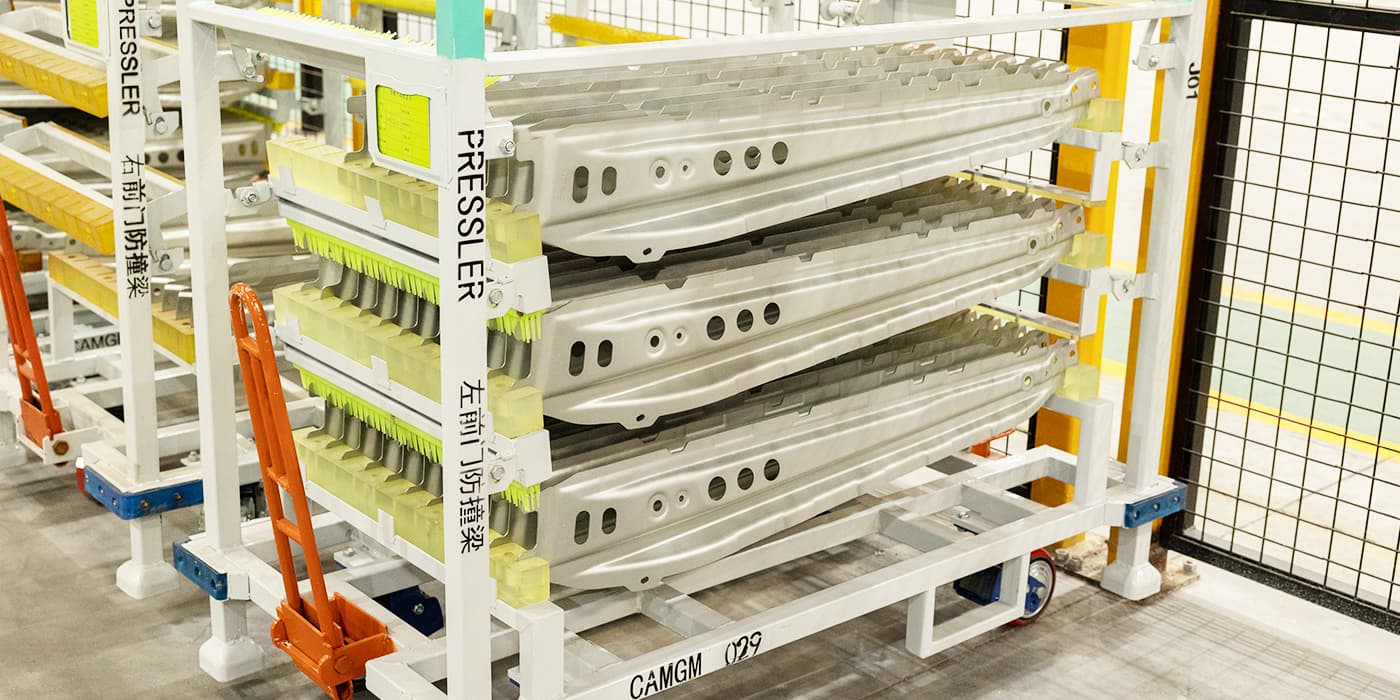

Vacuum Hot Formed Electro-galvanized Car Body Parts
Pressler conducts R&D innovation targeting current pain points in hot forming, revolutionizing traditional hot forming technology to develop products with advantages over aluminum-silicon coated hot-stamped white body parts - vacuum hot formed electro-galvanized parts. Pressler vacuum hot formed components use 22MnB5 bare plate material for hot pressing, with 100% zinc coating composition, uniform film thickness, and can be designed and controlled in the 7-13um range according to requirements.
Pressler vacuum hot formed components can achieve strength of 1500MPa, while custom 2000MPa components are available, with hardness range: 71-76 HRA.
Pain Points of Current Hot Forming
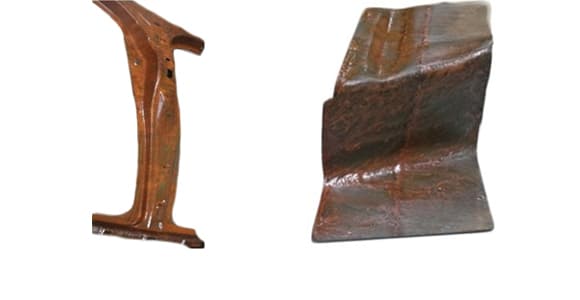
Corrosion Problem
Poor corrosion resistance of Al-Si hot-formed parts at welds and cut edges; Poor overall corrosion resistance of bare plates.
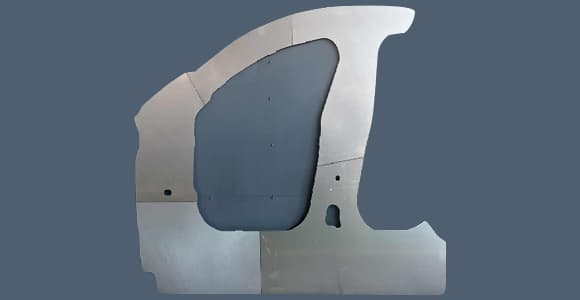
Tailor Welding Problem
High cost of laser tailor welding Al-Si coated plates. High equipment cost, low production efficiency.
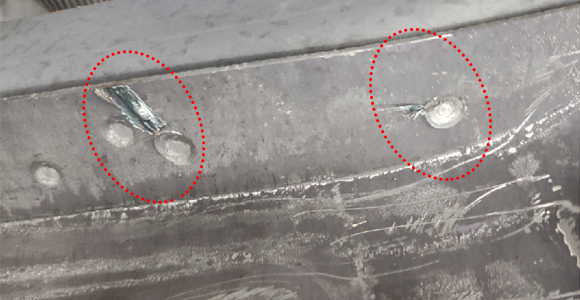
Spot Welding Problem
Spatter occurs during spot welding of Al-Si coated plates; And the welding window is narrow.
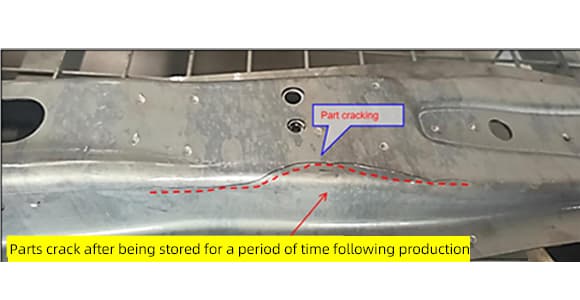
Low Elongation and Hydrogen Embrittlement Problem
Al-Si coating materials at 2GPa and 2.2GPa are more prone to low elongation problems and hydrogen embrittlement risk compared to 1.5GPa.

Pressler Innovative Solutions
Pressler conducts R&D innovation targeting current pain points in hot forming, developing bare plate vacuum hot forming followed by galvanizing process, revolutionizing traditional hot forming technology.
The core of vacuum hot forming followed by galvanizing process lies in vacuum heating and stamping of bare plate steel, then electro-galvanizing treatment of the hot-formed bare plate components.
Vacuum hot formed electro-galvanized parts surpass aluminum-silicon coated hot formed parts in corrosion resistance, cold bending performance, welding performance, and other aspects, while breaking through aluminum-silicon coating patent restrictions. Raw material selection is more flexible, no longer limited to raw materials from a single steel mill, providing greater choice.
Advantages of Vacuum Hot Formed Electro-galvanized Parts
To verify the performance of vacuum hot formed electro-galvanized parts, we conducted numerous experiments including mechanical performance testing, tailor welding hardness testing, corrosion resistance, drop impact testing, hydrogen embrittlement risk assessment, and other tests, reaching the following conclusions:
Excellent Corrosion Resistance
Zinc coating is applied after hot pressing, completely unaffected by heating and stamping. The coating is dense and has anodic protection, with excellent corrosion resistance. In 10-week cyclic corrosion resistance experiments, hot-formed electro-galvanized parts show superior corrosion resistance compared to aluminum-silicon coated plates and bare plates.
Good Mechanical Properties
Drop hammer impact test comparison shows that vacuum hot formed electro-galvanized parts have no coating cracking or powdering phenomena like aluminum-silicon coated parts during collision, and have larger bending angles than aluminum-silicon coatings. During collision, electro-galvanized parts have excellent collision energy absorption, absorbing 6% more energy than aluminum-silicon. Drop impact experiments verify the superiority of vacuum hot formed electro-galvanized parts in collision safety performance.
No Shot Blasting Deformation
This process achieves bare plate heating, widely applicable to bare plate door rings, laser welded plates, unequal thickness plates for hot forming. Combined with subsequent electro-galvanizing process, hot-formed electro-galvanized parts require no shot blasting, eliminating shot blasting deformation issues.
Excellent Welding Performance
The spot welding window of vacuum hot formed galvanized parts is significantly wider than aluminum-silicon coated materials. There is no spatter during spot welding, low tailor welding difficulty, stable weld quality, and overall welding process performance has obvious advantages over aluminum-silicon coated steel.
Cost Advantage
By using bare plates for laser tailor welding and hot stamping forming, there is no need for coating ablation treatment like aluminum-silicon coatings during laser tailor welding. The cost of integrated electro-galvanized door rings can be reduced by about 10%-15%, with no export patent risks.
Breakthrough in Raw Material Restrictions
Raw materials use bare plate steel, breaking through aluminum-silicon coating patent restrictions, no longer limited to raw materials from a single steel mill, offering a wider range of choices.
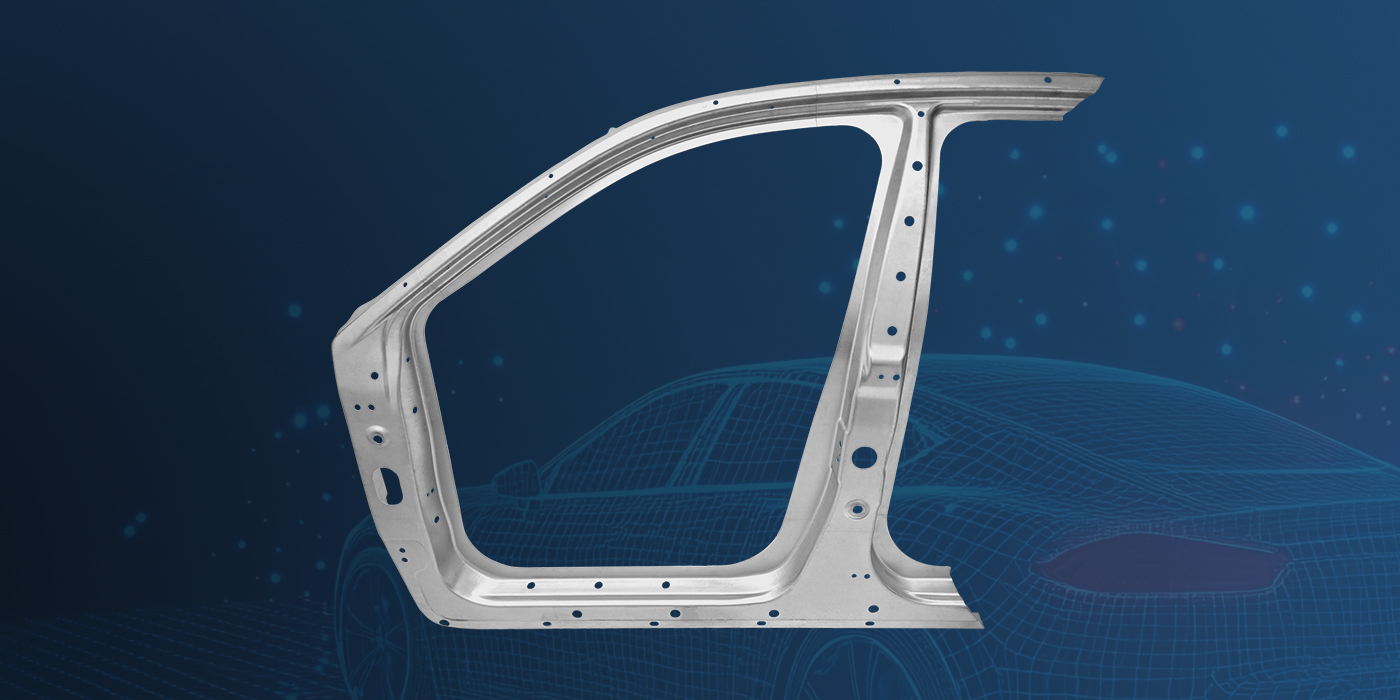
Vacuum Hot Formed Electro-galvanized Integrated Door Ring
Addressing the current industry issues of weak corrosion resistance in hot-formed parts and the need for manual removal of spatter and burrs in spot welding. Pressler adopts a technology combining laser welding of unequal thickness and different hardness materials, vacuum heating and forming, and electro-galvanizing, to produce an integrated vacuum hot-formed galvanized door ring.
By selecting bare plates for laser tailor welding and hot stamping, no ablation treatment of the coating is required like aluminum-silicon coating in laser welding. The cost of integrated electro-galvanized door rings can be reduced by 15-20% compared to other tailor welding, with no export patent risks. In addition, door rings manufactured with galvanizing technology have good corrosion resistance, and the spot welding process produces no spatter and burr phenomena, which can improve the production environment of spot welding lines, reduce the manual deburring rework process of spot welding procedures, and have good collision energy absorption. While reducing costs, it can increase vehicle safety performance.
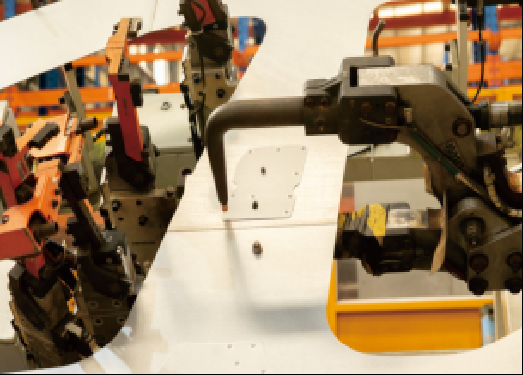
Product Advantages
Conventional bare plate laser tailor welding, no aluminum-silicon coating tailor welding patent restrictions;
Better corrosion resistance than aluminum-silicon coating and indirect hot forming galvanizing;
Large adjustable welding window, no spatter and burrs, excellent welding performance.
Better bending angle than aluminum-silicon coating, excellent collision energy absorption;
No shot blasting required, no shot blasting deformation;